
Sleep Trackers: A Double-Edged Sword for Modern Sleep Health
In recent years, the proliferation of consumer-grade sleep tracking devices has dramatically reshaped how individuals perceive and monitor their sleep. However, emerging research suggests that while these devices can offer useful insights, they may also inadvertently contribute to increased anxiety and sleep disturbances if misused.
This article examines the science behind sleep tracking, its limitations, associated health concerns, and evidence-based recommendations for responsible use.
What Sleep Trackers Actually Measure
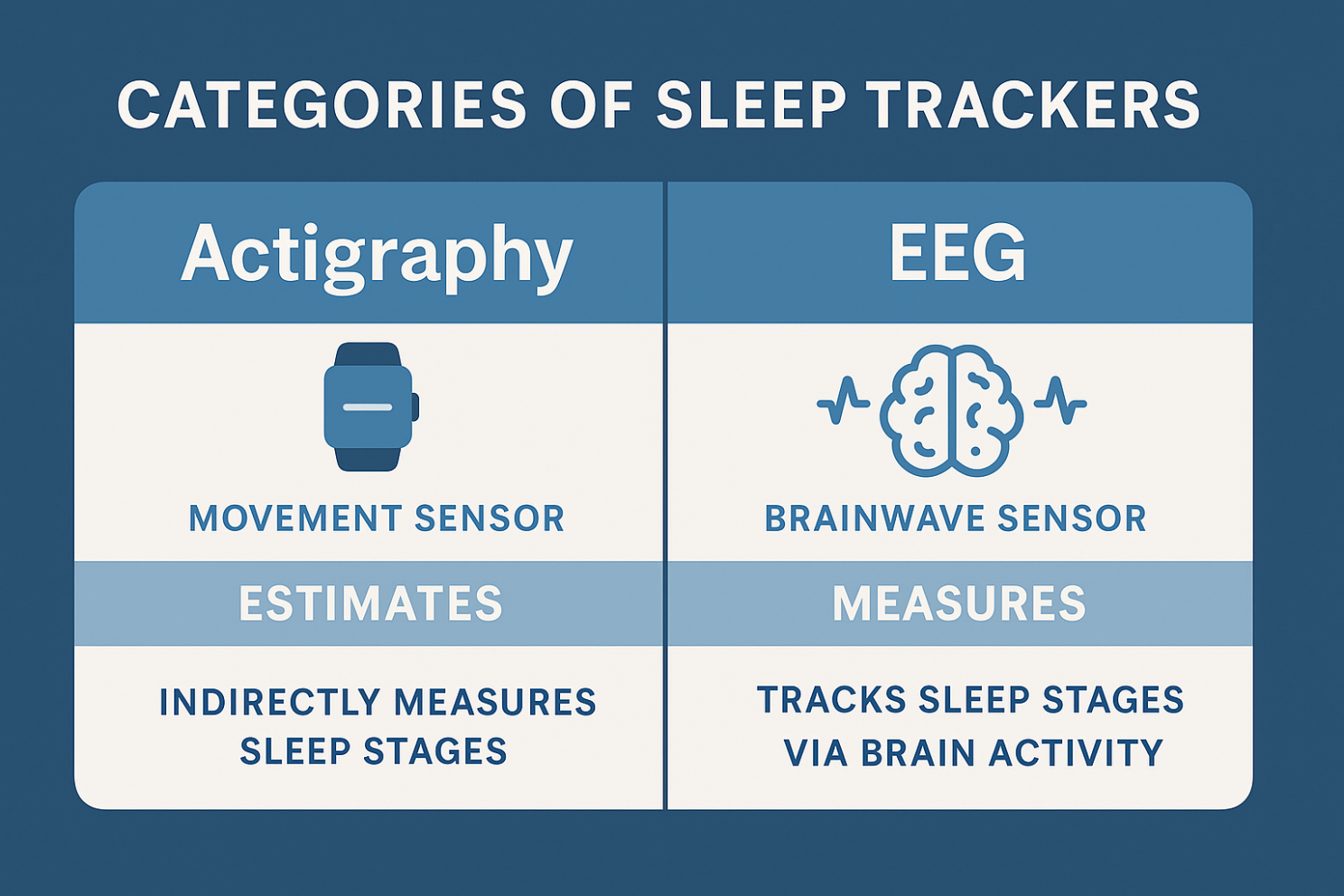
Two main types of sleep tracking tech. Most commercially available sleep trackers, including devices like the Oura Ring, Fitbit, and Apple Watch, utilize actigraphy. This technique estimates sleep patterns based on motion detection, heart rate variability (HRV), and peripheral skin temperature.
However, actigraphy-based devices do not directly measure sleep stages (NREM, REM) or brainwave activity. Instead, they infer sleep quality indirectly based on external body signals.
In contrast, devices that incorporate electroencephalography (EEG), such as the Dreem 2 Headband or MUSE, record electrical brain activity and provide a more accurate assessment of sleep architecture. Yet, EEG-based devices are typically less accessible due to higher cost and complexity.
🔬Key takeaway: Most wearables measure physical stillness — not the depth or quality of true brain recovery during sleep.
Orthosomnia: When Tracking Sleep Causes Sleep Problems
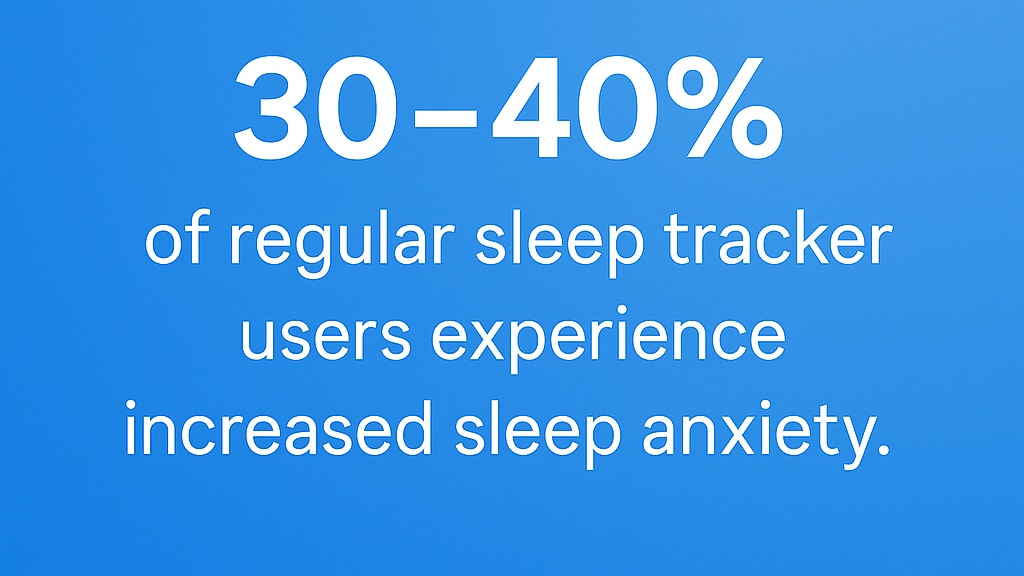
Baron et al., 2017, Journal of Clinical Sleep Medicine
Orthosomnia — a term coined in a 2017 study published in the Journal of Clinical Sleep Medicine — describes a phenomenon where individuals become so preoccupied with achieving “perfect” sleep scores that it paradoxically worsens their sleep quality.
Key findings from the study:
Patients presented with insomnia-like symptoms despite normal sleep study results.
Anxiety about data (e.g., "low" sleep scores) was a major contributor to hyperarousal and sleep fragmentation.
Why? That's because chronic sleep-related anxiety is known to stimulate the hypothalamic-pituitary-adrenal (HPA) axis, increasing cortisol levels and suppressing both deep sleep (slow-wave sleep) and REM sleep cycles.
Are Sleep Trackers Safe? The EMF Question
I get asked this a lot! Clients often have concerns about electromagnetic fields (EMFs) emitted by Bluetooth-enabled devices worn overnight.
Current evidence suggests:
A 2021 review (Frontiers in Public Health) concluded that low-level, non-ionizing radiation emitted by consumer devices like wearables does not pose significant health risks when operating within regulatory limits.
The International Commission on Non-Ionizing Radiation Protection (ICNIRP) and the World Health Organization (WHO) both affirm that exposures from such devices remain well within safety thresholds.
However, prudent use is recommended. Where possible, disabling Bluetooth (e.g., using airplane mode) during sleep may be an additional precautionary measure.
Evidence-Based Recommendations for Sleep Technology Use
To maximize benefits and minimize unintended consequences, the following guidelines are advised:
✅ Use Trend Data, Not Single-Night Metrics
Sleep variability from night to night is normal. Analyze longitudinal trends rather than reacting to isolated low scores.
✅ Balance Objective Data with Subjective Feelings
Daily self-assessments (e.g., morning mood, energy levels) should be used in parallel with device outputs to form a complete picture.
✅ Avoid Overemphasis on “Perfect” Sleep Scores
Target healthy sleep habits and consistent routines rather than optimizing for algorithm-generated scores.
✅ Choose the Right Tool
For detailed sleep architecture analysis, EEG-based systems are scientifically superior, though less convenient. For general pattern monitoring, actigraphy-based devices provide sufficient insights.
✅ Minimize Device Emissions During Sleep
If concerned about EMF exposure, opt to activate airplane modes or device settings that disable wireless transmissions during sleep periods.
Final Takeaway
Sleep trackers offer an unprecedented opportunity to raise awareness around sleep health. However, users must approach this technology critically: understanding its limitations, resisting perfectionism, and contextualizing sleep metrics within broader indicators of health and wellbeing.
Your goal isn’t to get a "perfect score." It’s to live, feel, and recover better.
Use tech as a helpful guide, not a strict ruler. Real health happens when you train your brain and body to listen to themselves—not just the apps.
🎯 If your sleep feels off, or you’re overwhelmed by your data, let’s talk. I coach high performers to understand their sleep architecture, reset their stress, and restore their brain to better balance.
Contact me if you’d like to learn how.
References
Martin JL, Hakim AD. (2011). The Accuracy of Wrist Actigraphy for the Assessment of Sleep in Healthy Adults. Sleep Med Rev.
Baron KG et al. (2017). Orthosomnia: Are Some Patients Taking the Quantified Self Too Far? J Clin Sleep Med.
Redmayne M. (2021). International Policy on RF-EMF Exposure. Sci Total Environ.
Frontiers in Public Health. (2021). Assessment of Non-Ionizing Radiation Health Risks.